
Walking through grief with children
“Is Daddy naked in heaven?”
“Uh, I’m not sure” This question came two weeks after my husband passed, as I headed out in my minivan with my 6 year old and 4 year old in tow.
“What do you think he’s wearing; Bible clothes or his clothes?”
“I mean….Adam and Eve were naked so maybe naked? But also maybe in his own clothes…”
My attempt at answering the question philosophically was interrupted by a quick “I don’t think he’s naked.” then the conversation moved on to super heroes or something seen from the van window.
When my late husband died our children were newly 6 and nearly 4. Walking through the death of a spouse along side your children who lost a parent is quite the journey. It impacts the grief journey of both the parent and the children uniquely and intensely.
The Parent
For one, it didn’t matter much whether or not I wanted to talk about it, the kids could bring it up at any moment and I certainly didn’t want to dismiss or ignore them. I understood and respected that they didn’t think and grieve like an adult, but it could still be quite jolting when a thought would pop up in their minds at any moment and they’d just ask it when you were the least mentally and emotionally prepared.
“Who is going to pick us up from school now?” “Can he hear us?” “Why did he have to get sick?” “Do you technically still have a husband?” “Who will wrestle with Grandpa now?” “Is it night or day in Heaven?”
These questions would often come in the van or while tucking them into bed. I’d answer what I could and to the rest I’d simply say “I’m not sure, that’s a good question. What do you think?” Sometimes they’d move to the next topic quickly as I was left reeling, other times they’d be overwhelmed with sadness and needed to be held. Most of the times I would answer them the best I could with a calm presence and “hold it together,” only to break down moments later in the comfort of my front seat facing away, on the moonlit hallway floor, or my couch. Other times I would answer them through hot tears.
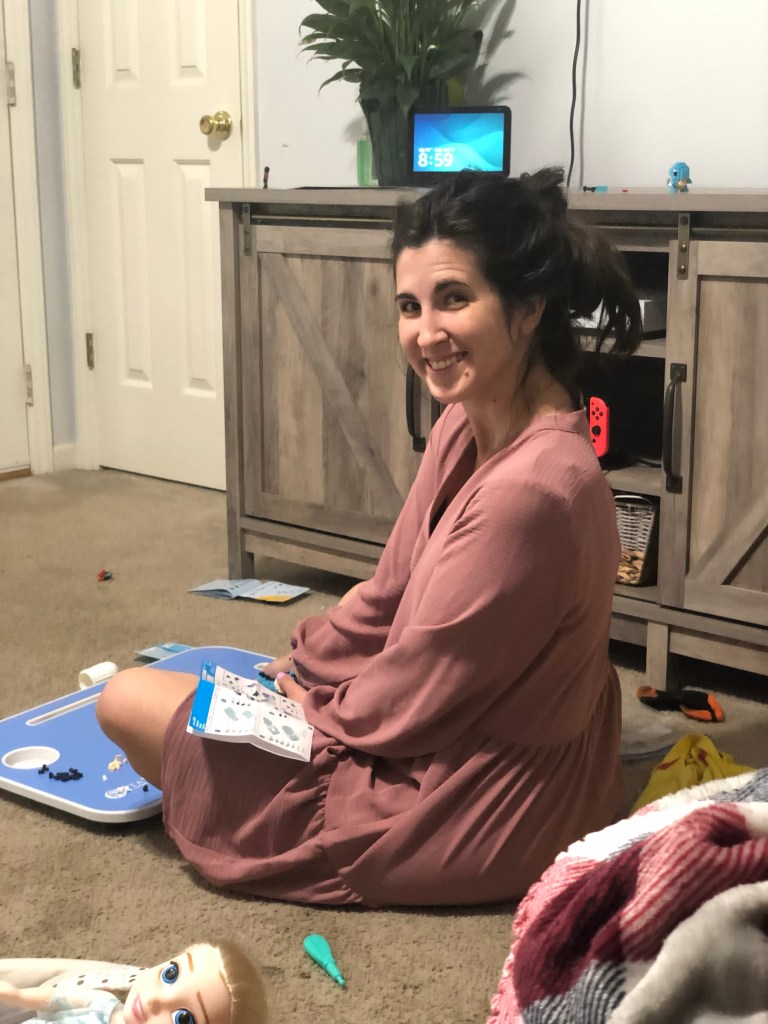
Secondly, I had just been thrusted into life as a single parent; so all of the financial responsibilities, discipline, boo boo kisses, bathing, feeding, homework help, playtime, and bedtime fell on me. That’s not to dismiss all the help I had early on, but not every widow/widower has the same support, and at the end of the day I was still a single mother. The one to decide what part they take in the funeral. The one to decide how much information to give them at an age appropriate time. The one who decides what happens to the house we were all in together. While I recognized at the time the importance of my kids seeing me vulnerable, there was also just so much day to day life and parenting that required me to move forward (never on) and to be in the present moment. That felt like both a blessing and a burden at times. I’ll never forget this moment pictured below when I was overwhelmed with a wave of intense grief and loneliness of missing Bubba and at the same time building an annoyingly difficult Pokémon Lego because that’s what my kids needed in that moment. Walking in grief with them kept me from feeling stuck in time, but if I wasn’t careful it also kept me busy enough to not take notice of what I needed in the moment.
Lastly, I have always felt the weight and responsibility of being the primary memory keeper of the parent they lost as well as the historian for this time in their life. Primary, not only. I am grateful to have friends and family who help to remind the kids of who their Daddy Bubba was. Yet, as one who is with them every day, as the one who was closest to Bubba for the last 12 years of his life, as the adult walking closest with them in their grief journeys, it is in large part my responsibility. The one who preserves their late father’s memories, not knowing what they’ll want and need to know over the years. It’s a privilege and an honor to be the keeper of so many precious memories and items…and it’s also very hard sometimes.
The Children
Children’s brains are still growing, which creates a great risk when faced with trauma and stress. A study from the University of Pittsburgh in 2018 showed that “pediatric grief following parental loss increased rates of depression and functional impairment.” Clarissa Moll is an amazing writer and fellow widow, she wrote “I’ve spent the last year researching and writing for grieving teens, and I’ve been sobered by the enormity of what our young people carry. The statistics, research, all of it tells me that the wounds children carry from loss need delicate and dedicated tending by trusted, compassionate adults who are willing to talk with them for the long haul.”
Even though their developing minds put them at risk, the good news is that it also provides a great opportunity for positive change. While a house may be most vulnerable when its foundation is being poured, houses can be remodeled many years later. As Clarissa Moll so eloquently put it, “Yes, statistics tell me that loss accompanies children in ways that make them vulnerable as they grow. But statistics aren’t the only data on which I should rely. Part of my call as a parent is to help my girls learn to confidently engage with an unfriendly world. God has placed me in their lives to teach them how to care for themselves, how to discern right from wrong, and how to live as lights in darkness. “
When Bubba died I immediately reached out to adults I knew who had lost parents as kids to hear from them, to find out what they wished their parents had done differently or what they appreciated that they did do. And you know what? All those adults I asked, are amazing human beings. That part of their story changed their lives but it didn’t ruin them or define them.
The psychology teacher in me wanted to list more of the psychology and research of pediatric grief’s effect on the brain, I believe that in educating ourselves we can be more compassionate and informed when it comes to supporting the young people in our lives who have lost parents. However, I don’t want to create fear in a post meant to bring connection, hope, and encouragement. So I would encourage those who are still curious, especially if you are around children who have lost a parent, to engage in research and educating yourself deeper on the topic.
What do I do?
So what do we do as newly single parents, in the midst of grieving our spouse, while also supporting our children in their grief? I don’t claim to be an expert, but I do want to share some basic tips and ideas. It can be easy to feel the pressure to do everything all at one or the fear of screwing it up. Please, don’t read this a list of things you NEED to do right away but rather a list of things you could do, when you and your family are ready. Sure, there are some pretty clear wrong ways to grieve and raise your kids…but there’s certainly not one right way to do it. So I’ll tell you some of the things that worked for our family so far, knowing we still have such a long road ahead of us still.
1. Therapy-On an airplane you put your oxygen mask on first so you can take care of those who can’t do it for themselves. Being in counseling for yourself gives you space to talk openly about your feelings and challenges. It’s a time of self-care and grown up conversation, which are both much needed. As important as it was for me to go to therapy, it was equally important for me to have the kids seeing a counselor early on. It removed some of the burden I felt of tending to their emotional psychological needs by giving me another person, a professional, that they could talk to and who could provide me with tools for raising these kids through grief. When looking for somewhere for your child, check around for those who specialize in working with children and grief. Child centered therapy isn’t like with adults, they’re not just sitting and talking for an hour but typically communicating what’s going on through playing or moving. You can even search for a licensed play therapist! I wanted my kids to grow comfortable with the idea of therapy proactively instead of reactively down the road.
2. Blanks journals and iPhone notes– For the first several months everyone in the house is in a fog. As much as I wanted (and felt pressure) to write long eloquent journals early on, I simply didn’t have the mental capacity. I kept a note in my phone where I would jot down thoughts, things the kids said, moments I didn’t want to forget (good and bad) while they were fresh in my mind. Some things I didn’t come back around to for a year or even two. In fact, one of the notes was full of things the kids said early on that I used for this post! Most of which I totally would have forgot. For the kids, they each had a blank journal and crayons on their night stands and any time they wanted to they could draw pictures (neither were old enough to write at the time) for Daddy or about Daddy, whatever they needed. There are great guided books on the market to record thoughts, feelings, and memories but many times what the three of us needed was just a blank canvas and no expectations.
3. Photo books and special memory items- This is something I wasn’t able to do for about two years. When my heart was ready for such an in depth project, I made Shutterfly albums for each kid of almost every photo of them and their Dad. I talk about other special memory ideas like Memory Bears here. I’m also working on a book just for them that tells them all about their Daddy, from the big things to the most random. This project takes a lot of time and mental/emotional energy so it’s taking me a while, and that’s ok!
4. For widows and widowers thinking about blending-If you decide to start dating after the loss of a spouse, FamilyLife Blended is a great ministry and resource! They have books, Podcasts, and social media accounts that provide guidance, tips, and community around the issues of preparing to blend and blending families after loss. (While I have yet to share my own full story on love after loss, there are posts planned for later)
5. Community– There are experts, there are people who care, there are people who are further down this road in their widowhood journey. Without putting undue pressure on yourself, I highly recommend seeking a community of those who can pour into you and your children. Seek out groups and communities online or in person. Many churches offer grief share groups. Nothing is Wasted ministries offers online community. There are Instagram pages and podcasts of wonderful people experiencing similar things. I’ll never forget finding Nothing is Wasted Ministries, then finding Spilled Milk Mama on Instagram, our stories were so similar. Then later, finding Dorina Gilmore! When life can feel so isolating, know that you aren’t alone!
6. Give yourself all the grace and time – Grief isn’t linear and it is never complete. Give yourself, and your kids, tons of grace and time in this healing journey!
7. Permission to say no-Not that you need my permission by any means, but perhaps you’re a people pleaser and feel like you do. Your family is worth protecting! Your time, your home, your energy, your hearts, your minds. Setting boundaries and protecting all of those things can be so difficult (trust me I know) but it is so important! “You can decline advice or fixing, you don’t have to share details that you don’t want to, you can say no to invitations without an excuse or explanation, you decline an offer for help if it isn’t the help you want or need. Boundaries are self care (@whatsyourgrief).”
Kids Resources
Books for the kids
There are a ton of books on the market. These are all books we were gifted or purchased. I would highly recommend reading them yourself before reading them to your kids so you can make sure it is appropriate for your kids and their ages, and to prepare for any potential questions or hard conversations. Some books are very direct and others are most metaphorical, some are Christ centered and others are not. Some are research based and some may be more for entertainment.
The Invisible String -We were gifted three copies of this book, while I felt like it helped the kids feel safe and connected to me when I wasn’t right next to them, at their young age it seemed more confusing to try to explain in relation to their Daddy in Heaven
My Yellow Balloon– “A poignant tale of love, loss, and letting go that will serve as a comforting guide to children who are navigating the complicated emotions of grief”
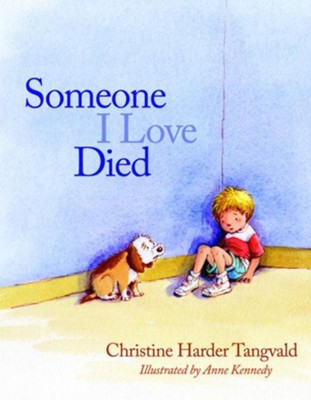
Someone I loved Died-Meant for children 4-8, it gently leads children through grief with age-appropriate words and solid biblical truth that understands a child’s hurting heart.
The Rabbit Listened – A favorite. Not about loss, but about empathy and listening. A great book for anyone!
Goodbye to Goodbyes -A Christian children’s book about grief, loss, suffering, death & the gospel. This has been great for us two years in but I think it would have been really difficult to read early on to be honest.
The Memory Book-This one felt very overwhelming for me at first, we would answer questions just a little at a time, take long breaks, go with however comfortable the kids felt
Heaven for Kids– Intended for kids ages 8–12, Heaven for Kids features ten chapters of questions and answers based on Scripture and is written in a style relevant to kids.
Out of a Jar– Excellent book on expressing emotions
What am I feeling? Christian book on expressing emotions
Gifts
People were constantly bringing little goodie baskets and gifts to the kids. These were some of my favorites that we found most comforting.
Kids sizes weighted blanket
Legos
Coloring books and crayons
Essential Oil Rollers
Ice Rollers for your face
Leave a comment:
What are some of your favorite books or resources for grieving children?
What were some of those difficult moments of walking through grief with young children?


Leave a Reply